

What I’ve Learned about The Crimson Word
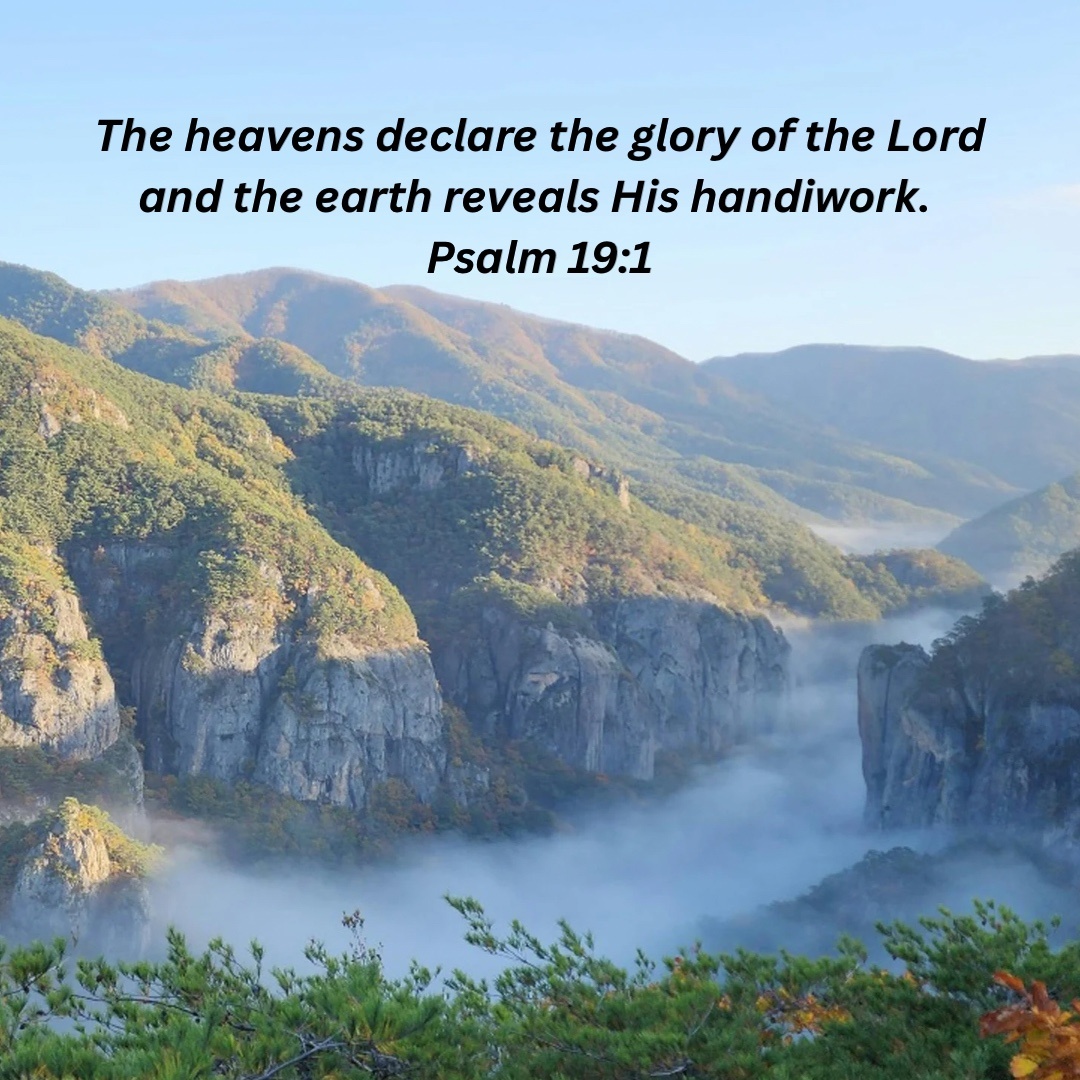
Psalm 19: 1-2 The heavens declare the glory of God and the earth reveals His handiwork. Day after day utters speech and night after night reveals knowledge.
Oftentimes when I think about God weaving His story into nature I think of mountains, and oceans, the moon and stars, the Grand Canyon, Niagara Falls…Sometimes, His fingerprints are smaller…
In the Jewish interpretation of Scriptures there is a Hebrew word known as REMEZ that means hint, clue, or allusion. In Jewish tradition, it specifically refers to a deeper, allegorical layer of text interpretation or a teaching technique where a speaker implies a broader concept without explicitly stating it. It’s said to be a treasure below the surface of the words.
I want to tell you about a remez called the Crimson Worm.
It’s actually an insect, a bug, but it’s called a Crimson Worm because of its shape. The Crimson Worm is native to Israel.
When a female Crimson worm is ready to reproduce, which happens only one time in her life, she climbs a tree and attaches itself to it.
1 Peter 2:24, “He himself bore our sins in his body on the tree, that we might die to sin and live to righteousness.”
The crimson worm’s body becomes a hard protective shell. She lays her eggs beneath it. Once hatched they feed on the mother’s body for the next three days.
Matthew 26:26, “And Jesus said, take and eat, this is my body broken for you.”
After the third day, the mother worm pulls her tail up into her head resulting in a heart shape and dies. As she does, her body excretes a crimson or scarlet dye that stains the wood where she’s been attached— and stains her baby worms. The baby worms remain crimson colored for their entire lives, marking them as crimson worms.
The body of the mother then turns into a white waxy material that looks like wool and flakes off the tree, looking like snow on the ground.
“Come now, let us reason together,” says the Lord. “Though your sins be like scarlet he will make them white as snow, though they are read like crimson, I will make them as white as wool.” Isaiah 1:18
The brilliant red dye harvested from the crushed bodies of these dried female insects was an expensive luxury in antiquity. According to biblical accounts, it was explicitly mandated by God to dye the curtains of the Tabernacle and the sacred robes worn by the High Priest.
Uses of this red dye continue today. While still red and attached to the tree, the worm’s body and shell are scraped off and used to make what is called “Royal Red Dye.”
The waxy material is used to make high-quality shellac which is used in the Middle East as a wood preserver. Preservation:
“For I know the thoughts that I think toward you, says the LORD, thoughts of peace and not of evil, to give you a future and a hope.” Jeremiah 29:11
The remains of the Crimson Worm are also used in medicines that help regulate the human heart. “But He was wounded for our transgressions. He was bruised for our iniquities. The chastisement of our peace was upon Him. And by His stripes we are healed.” Isaiah 53:5
Friends, Jesus could have described Himself as any number of majestic animals. Instead, He called Himself a worm in the Messianic poem of Psalm 22.6, “But I am a worm, and no man; a reproach of men and despised of the people.”
The original Hebrew word used in this verse is tola’ath, which can refer to an ordinary worm but is also specifically used for the “crimson worm” or “scarlet worm”
I found a quote by Charles Spurgeon that says it all for me. After hearing of the Crimson Worm, he wrote the following words: “There is a little red worm which seems to be nothing else but blood when it is crushed. It seems all gone except a blood-stain. And the Savior, in the deep humiliation of His spirit, compares Himself to that little red worm. How true it is that ‘He made Himself of no reputation’ for our sakes! He emptied Himself of all His Glory, and if there is any glory natural to manhood, He emptied Himself even of that! Not only the glories of His Godhead, but also the honors of His Manhood He laid aside that it might be seen that ‘though He was rich, yet for our sakes He became poor.’”
Amen and amen. I hope you’ve enjoyed this story. I know I have. I’ve told it to anyone who’ll listen. Our God is bigger than we can imagine, and His goodness is sweeter than we have tasted. Let us stay in pursuit of Him, together. He loves us all and Jesus is proof!
Hugs, Shellie
Sorry, the comment form is closed at this time.

On how to think straight with a few lagniappe thoughts from Shellie
Hey, friend! I've been thinking about you. All of you. I wanted to catch

For the Love of Labor
Would you say you have a healthy mentality about work? Yes, no, not sure?
Spring langniappe from my house to yours ~ ShellieT
Hey friend! It’s ShellieT here with a host of different things on my mind,
Janet Wade
Thanks for sharing this with us. I had never heard of the crimson worm until a couple of days ago. The reference then was Christ on the cross quoting Psalm 22:1 and went from there drawing the comparison. The more I hear/read about it, the more impressed I am with God showing Christ in every aspect of nature. He is truly there, if we just look and listen! Thanks again for all you do. It is so good to hear from you again
Shellie Tomlinson
Oh, amen! He is with us. Praise Him. 🙂 And you’re welcome! It’s good to hear from you, too!
Jan Faught
Thanks for sharing about the Crimson Worm and likeness to Jesus.
Shellie
You’re so welcome! I love it 🙂